


Key takeaways
- This fall the RTX Spark puts a credentialed AI agent on a new generation of Windows PC, shipping from Dell, HP, ASUS, Lenovo, Microsoft Surface, and MSI.
- An on-device agent is a new enterprise identity, holding live credentials and autonomous access across your SaaS.
- Agent policy enforcement tools like OpenShell govern what an agent is permitted to do- but policy enforcement is not detection. Knowing an agent violated a rule is not the same as knowing a trusted agent has been turned against you.
- Securing it is the job Helios AIDR was built around: defend your AI, defend against AI, and defend with AI.
- Mitiga’s Zero-Impact AI-native CDR platform with Helios AIDR detects and contains agent-driven attacks across Cloud, SaaS, Identity, and AI.
- Agentic Runtime Security catches the early signals of an attack in motion across cloud, SaaS, identity, and AI and stops it before it makes impact.
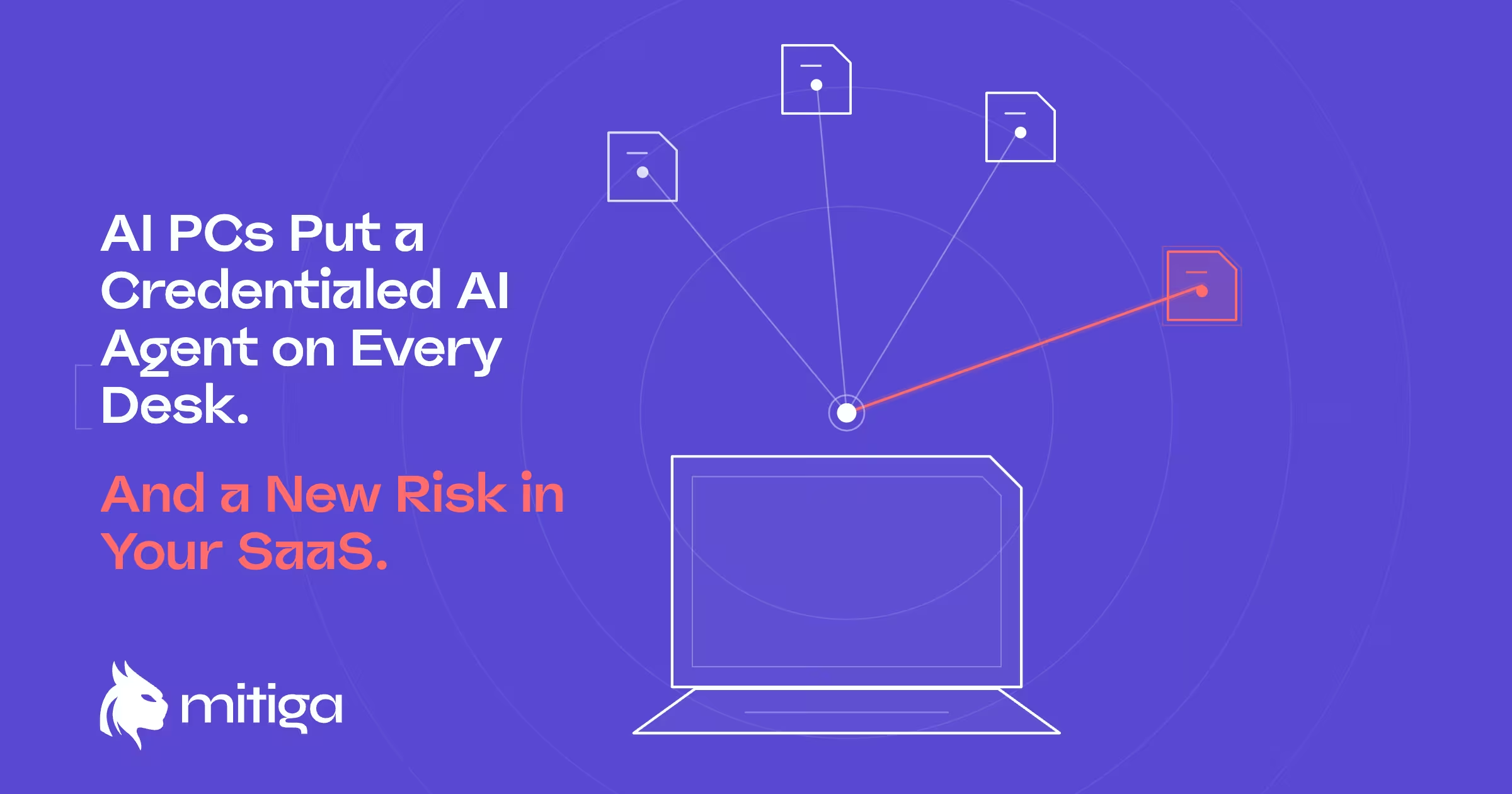
This fall, every new Windows machine becomes an AI machine. Nvidia and Microsoft’s RTX Spark runs a 120-billion-parameter agent locally, and Dell, HP, ASUS, Lenovo, Microsoft Surface, and MSI are already building it in.Underneath the hardware milestone is a security shift launch week mostly skipped: an AI PC drops a new, credentialed identity into your environment, and that identity has to be defended like any other.
At Mitiga we look at agentic AI through the lens of the three jobs that now define cloud security operations: defending your AI, defending from AI, and defending with AI. An AI PC puts all three on your desk at once.
Defend your AI
An on-device agent doesn’t sit idle. When deployed with SaaS integrations (as enterprise agents are increasingly designed to be) – it signs into your CRM, email, cloud storage, and productivity tools, holding live credentials and acting on them without anyone watching. In identity terms, it’s a powerful new principal inside your environment, and most security programs have no plan for it yet.
It’s also a concentrated target. Compromise the device and an attacker inherits the agent’s permissions across every application it was trusted to touch: Salesforce, SharePoint, Workday, and whatever else it holds a token for. An endpoint compromise becomes a SaaS breach. So, the agent, its service identities, and the SaaS it reaches belong on the list of assets you actively monitor now, with their access paths watched before the blast radius widens.
Defend from AI
Attackers go where the access is and where no one is looking, and a credentialed agent on every desk is exactly that kind of opening – now paired with AI that is already accelerating reconnaissance, credential abuse, and cloud-speed intrusion, and will do the same here. Nvidia and Microsoft saw the exposure. Microsoft shipped new Windows security primitives. On top of them, Nvidia built OpenShell, an open-source agent policy enforcement tool that lets enterprises define and enforce boundaries on what their agents can do.
OpenShell is an enforcement tool. It defines what an agent is permitted to do and constrains its execution. What it doesn’t replace are the detection, threat correlation, and incident reponse functions a SOC runs. Knowing an agent violated policy is not the same as knowing when a trusted agent has been turned against you. A system meant to defend from AI has to deliver the ability to detect and contain AI-powered attacks that move faster than any human-only workflow.
Defend with AI
Watching agent activity by hand at machine speed isn’t realistic. Agentic Runtime Security, coupled with evidence gathering, attack timeline reconstruction, verdict, and next action recommendations, all handle that job before a human even opens the alert. Posture management flags where the risk sits. Agent policy enforcement tools like OpenShell control what an agent is permitted to do at execution time. Runtime security watches what it actually does – and catches the early signals of misuse before they can impact the business.
AGENTIC RUNTIME SECURITY
Surfacing the early signals from live activity acrosscloud, SaaS, identity, and AI so an attack already in motion is detected andcontained before it makes impact – the runtime safety net for the exposuresthat posture tools can only flag.
It’s delivered through Mitiga’s Zero-Impact AI-native cloud detection and response (CDR) platform. Panoramic Awareness pulls activity across Cloud, SaaS, AI, and Identity into one always-on view, so an agent’s API call is never an isolated log line. Attack Decoding turns the raw evidence into a structured timeline and verdict, clear enough to separate a routine agent session from an attacker using it as cover, and Attack Containment moves from that verdict to action, tightening control over the blast radius.
Powering it is Helios AIDR, our AI detection and response model for the Zero-Impact era, running on the Cloud Security Data Lake so analysts and AI work from the same full-fidelity context. In our deployments, customers report 90% improved detection and response speed, 70% reduction in mean-time-to-respond, and 67% faster time to close out alerts.
Start before the hardware lands
None of this waits for the RTX Spark. The agents are already in your browsers and productivity tools, and the chip only multiplies them. You can get started now. Go inventory the agent and non-human identities already in your environment, correlate endpoint context with SaaS telemetry, and keep forensic data deep enough to reconstruct an incident. Prevention alone won’t stop an agent from being turned against you. The goal is to make sure that when one is, it changes nothing that matters. That is Zero-Impact Breach Prevention. Let them come.
See what Zero-Impact Breach Prevention looks like across Cloud, SaaS, Identity, and AI infrastructure. Get a demo.
Frequently asked questions about AI PC security risks
What is the security risk of AI PCs like the Nvidia RTX Spark?
The main risk isn’t the hardware. An on-device AI agent runs with live credentials and persistent access to enterprise SaaS such as CRM, email, and cloud storage. If the device is compromised, an attacker inherits that access, turning an endpoint compromise into a SaaS breach.
How do you secure AI agents on AI PCs?
Treat the agent as an enterprise identity and cover three jobs: defend your AI, defend from AI, and defend with AI. In practice that means correlating endpoint context with SaaS API telemetry, baselining normal agent behavior, and retaining forensic data deep enough to reconstruct an incident.
Does OpenShell secure enterprise AI agents?
OpenShell provides a runtime policy engine – enterprises can define what their agents are permitted to do. It’s a useful control. What it doesn’t provide is detection, audit trails, and centralized correlation a SOC needs to catch a compromised or misbehaving agent.
What is Helios AIDR?
Helios AIDR is Mitiga’s AI detection and response model for the Zero-Impact era, delivered with the AI-native CDR platform across cloud, SaaS, identity, and AI environments.
What is Agentic Runtime Security?
Surfacing proactive, early signals from runtime activity across cloud, SaaS, identity, and AI, so attacks already in motion are detected and contained before they make impact. It’s the runtime safety net for the exposures posture tools can only flag, delivered through Mitiga’s AI-native CDR platform and Helios AIDR.
What is Zero-Impact Breach Prevention?
Mitiga’s approach to security. Rather than trying to prevent every breach, it detects and contains attacks across Cloud, SaaS, and Identity early enough that the breach causes no business impact.


